Biblioteca Vaisnava
Vedic philosophy platform
Biblioteca Vaisnava
Vedic philosophy platform
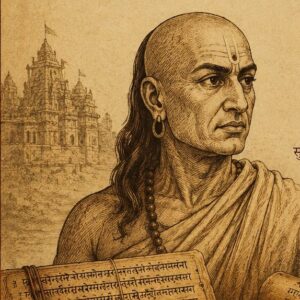
Canakya Pandita
Biografía
Chanakya Pandita, also known as Chanakya, Kautilya, or Vishnugupta, was an ancient Indian philosopher, teacher, economist, political strategist, and royal adviser who lived around the fourth century BCE. He is widely regarded as one of the greatest political thinkers in world history.
He was most likely born in Takshashila (Taxila), one of the foremost centers of learning in the ancient world. There he mastered the Vedas, philosophy, economics, politics, law, and statecraft before eventually becoming a respected teacher.
According to traditional accounts, Chanakya was publicly insulted by King Dhana Nanda of the Nanda dynasty. Determined to overthrow the king, he later encountered the young Chandragupta Maurya, recognized his exceptional potential, and personally trained him in leadership, diplomacy, military science, administration, and governance.
With Chanakya's guidance, Chandragupta successfully overthrew the Nanda dynasty and established the Maurya Empire, which became one of the largest empires in Indian history. Chanakya then served as his chief minister and chief architect of the imperial administration, designing systems of taxation, intelligence gathering, diplomacy, justice, and public administration.
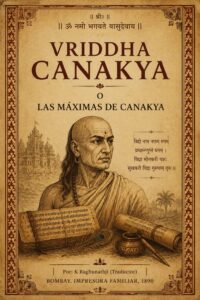
Chanakya is traditionally credited with authoring the Arthashastra, one of the world's earliest and most comprehensive treatises on political science, economics, administration, diplomacy, espionage, military strategy, and public policy. Despite being over two millennia old, the work continues to influence scholars, business leaders, economists, and military strategists.
He is also traditionally associated with the Chanakya Niti, a collection of ethical and practical aphorisms covering education, leadership, friendship, family life, wealth, discipline, and personal conduct. These sayings remain highly respected throughout India and are frequently quoted for their practical wisdom. They were also often cited by A. C. Bhaktivedanta Swami Prabhupada to illustrate practical principles of worldly life.
Although he is sometimes compared with Niccolò Machiavelli because of his political realism, Chanakya viewed power primarily as a means of preserving justice, stability, and prosperity. He believed that an effective ruler must combine intelligence, discipline, foresight, and firmness with a genuine responsibility toward the welfare of the people.
More than 2,300 years after his lifetime, Chanakya remains one of India's most influential intellectual figures, and his works continue to be studied across disciplines ranging from political science and economics to leadership and strategic management.