Biblioteca Vaisnava
Vedic philosophy platform
Biblioteca Vaisnava
Vedic philosophy platform
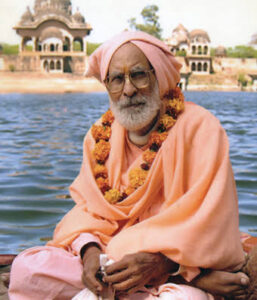
Śrīla Bhaktivedānta Nārāyaṇa Gosvāmī Mahārāja
Biografía
Śrī Śrīmad Bhaktivedānta Nārāyaṇa Gosvāmī Mahārāja, affectionately known to his disciples and followers as Śrīla Gurudeva, was a prominent spiritual teacher in the tradition of Gauḍīya Vaiṣṇavism and one of the leading modern exponents of the teachings of Śrī Caitanya Mahāprabhu.
He was born on February 7, 1921, on the amāvasyā of the month of Māgha, in Tiwārīpura, Buxar district, Bihar, India, into a respected brāhmaṇa family. His parents were devout Vaiṣṇavas of the Śrī-sampradāya. From childhood he was immersed in religious life, accompanying his father to recitations of the Rāmāyaṇa, as well as gatherings of kīrtana and spiritual discourses.
In 1945 he met Narottamānanda Brahmacārī, a disciple of Bhaktisiddhānta Sarasvatī Ṭhākura, who was preaching the teachings of Śrī Caitanya Mahāprabhu in that region. Deeply attracted to the philosophy transmitted by the ācāryas in the line of Rūpa Gosvāmī, Nārāyaṇa travelled in 1946 to Navadvīpa-dhāma, where he met his future spiritual master, Bhakti Prajñāna Keśava Gosvāmī Mahārāja.
From him he received harināma and dīkṣā and was given the spiritual name Śrī Gaura Nārāyaṇa. He thereafter accompanied his guru on extensive preaching tours throughout India and became deeply involved in serving the Vaiṣṇavas, as well as in organizing the annual Navadvīpa-dhāma parikramā and Vraja-maṇḍala parikramā. Because of the affectionate way in which he served the devotees, his spiritual master bestowed upon him the title Bhakta-bandhava, “the intimate friend of the devotees.”
In 1952, Bhakti Prajñāna Keśava Gosvāmī Mahārāja awarded him sannyāsa, after which he became known as Śrī Bhaktivedānta Nārāyaṇa Gosvāmī Mahārāja. In 1954 he was given responsibility for Śrī Keśavajī Gauḍīya Maṭha in Mathurā, which became an important center of his teaching and service. Throughout much of his life he also organized the annual Vraja-maṇḍala parikramā during the sacred month of Kārtika.
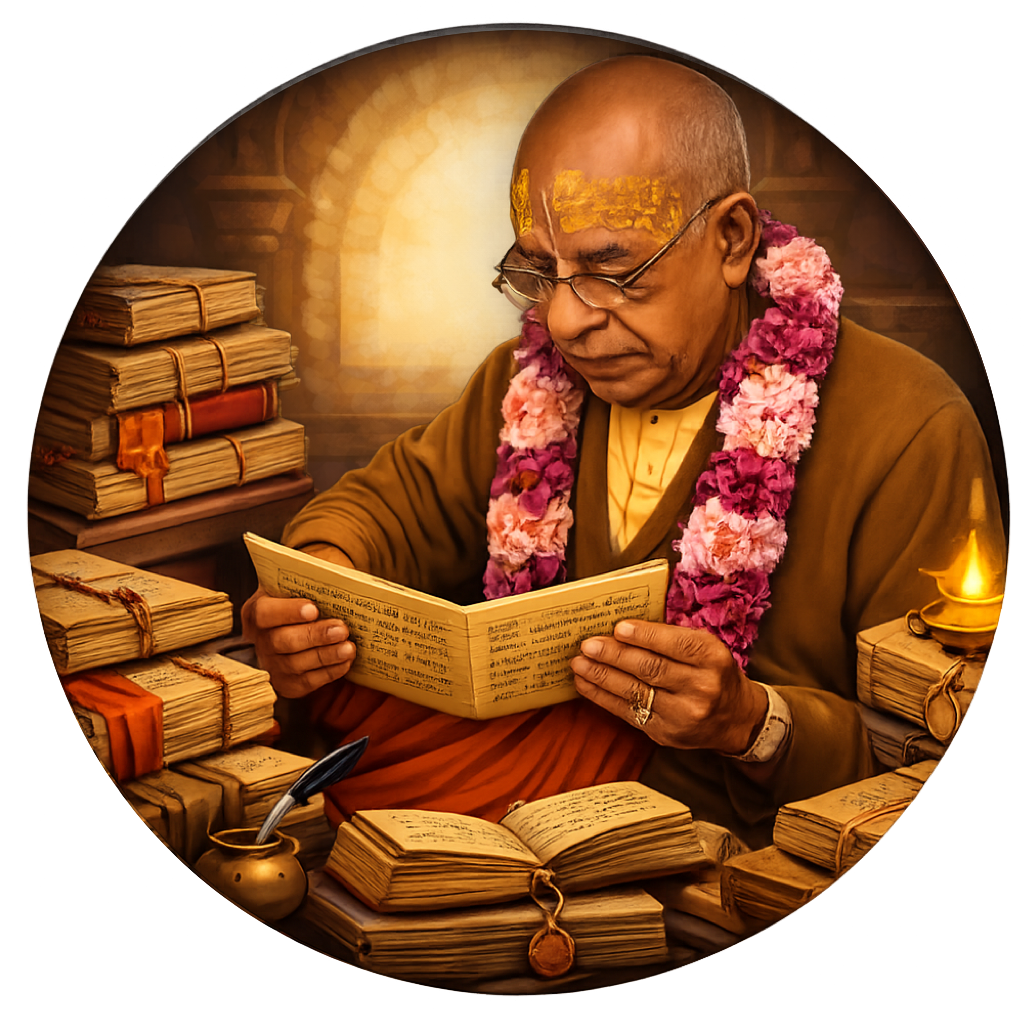
His spiritual master appointed him Vice-President of the Śrī Gauḍīya Vedānta Samiti and Editor-in-Chief of its Hindi publications and monthly journal, Śrī Bhagavata-patrikā. Following his guru's instructions, he translated and published numerous works of prominent ācāryas of Gauḍīya Vaiṣṇavism into Hindi, thereby making a major contribution to the preservation and dissemination of their theological heritage.
An especially significant relationship in his life was that with A. C. Bhaktivedānta Svāmī Prabhupāda, the founder of ISKCON. They first met in Calcutta in 1948 and remained spiritually and affectionately connected for decades. Śrīla Nārāyaṇa Mahārāja also regarded A. C. Bhaktivedānta Svāmī Prabhupāda as his śikṣā-guru, and after Śrīla Prabhupāda's departure, he offered spiritual guidance to many of his disciples and followers.
At the heart of Śrīla Nārāyaṇa Mahārāja's teachings was pure bhakti—loving devotional service to Śrī Rādhā-Kṛṣṇa following the ideal established by Śrī Caitanya Mahāprabhu and the Gosvāmī|Gosvāmīs of Vṛndāvana. His hari-kathā frequently explored the eternal relationship between the jīva and Kṛṣṇa, the progressive development of bhakti, rāgānugā-bhakti, and the teachings of Rūpa Gosvāmī concerning rasa and prema.
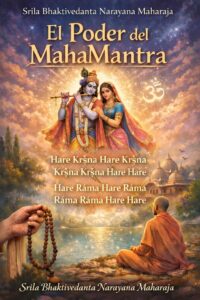
For many years his preaching activities were centered primarily in India. From the mid-1980s increasing numbers of Western devotees began seeking his guidance, and in 1996 he accepted repeated invitations to travel abroad. During the following fourteen years he circled the globe more than thirty times, teaching throughout Europe, the Americas, Asia, Australia, Africa, and elsewhere. Through his hari-kathā, books and initiations, the Hare Kṛṣṇa mahā-mantra and the teachings of Gauḍīya Vaiṣṇavism reached an increasingly international audience.
In addition to thousands of recorded discourses, he left an extensive literary and editorial legacy dealing with the Bhagavad-gītā, Śrīmad-Bhāgavatam, bhakti, guru-tattva, nāma-tattva, rasa, prema, Rādhā-Kṛṣṇa, and the teachings of the great Vaiṣṇavas of his guru-paramparā. Many of these works have subsequently been translated into numerous languages.
On December 29, 2010, at the age of ninety, Śrīla Bhaktivedānta Nārāyaṇa Gosvāmī Mahārāja concluded his manifest pastimes at Cakra-tīrtha in Jagannātha Purī-dhāma. The following day his body was placed in samādhi at Navadvīpa-dhāma.
His legacy continues through his teachings, books, disciples and the communities that preserve and transmit his message: that the ultimate aim of spiritual life lies beyond liberation itself, in the awakening of prema, pure and eternal love for Śrī Rādhā-Kṛṣṇa.